How to Do Kegel Exercises: Step-by-Step Routine and Muscle-Finding Guide
Learn what Kegel exercises are, how to find your pelvic floor muscles, a simple daily routine with sets and reps, progression tips and common mistakes to avoid.
Posted by
 Matt S.
Related reading
How to Last Longer in Bed: Behavioral Techniques, Breathing and Kegel Training
Proven ways to last longer in bed: stop-start and squeeze methods, diaphragmatic breathing, edging, sensitivity tools, pacing tips and how Kegel exercises build lasting control.
Pelvic Floor Exerciser vs Kegel Exercises: Which Is Better?
Pelvic floor tools versus manual kegels: how they differ, pros and cons, which fits your goals and when apps like SQZ help with guidance and consistency.
Kegling Exercises Explained: Benefits and Proper Technique
What kegeling exercises do for men: benefits, how to find your pelvic floor, step-by-step technique, a simple daily routine and mistakes to avoid.
Kegel exercises look simple on paper: squeeze, hold, release, repeat. The hard part is finding the right muscles and building a routine you can stick with. Get those two pieces right and the benefits add up faster than most people expect.
This guide walks you through what Kegels are, how to isolate your pelvic floor, a clear step-by-step routine and how to progress safely over time. Whether you are training for bladder control, pelvic support or better sexual function, the same fundamentals apply.
What Are Kegel Exercises?
Kegel exercises are simple, discreet clenches designed to strengthen your pelvic floor muscles. These muscles form a hammock-like support system at the base of your pelvis. They help hold up the bladder, uterus (in women) and bowels, and they play a direct role in urinary control and sexual function for both men and women.
Research and clinical practice show that consistent pelvic floor training can help with:
- Treating and preventing urinary incontinence
- Reducing symptoms related to pelvic organ prolapse
- Improving sexual function, including control and sensation
- Supporting recovery after prostate surgery (for men)
- Building awareness and endurance in the muscles used during ejaculation and erection (for men)
You do not need equipment to start. Your body weight and a few minutes of focused practice each day are enough to begin building strength.
How to Find the Right Muscles
Before you count reps, you need to know which muscles you are training. Many beginners accidentally squeeze the wrong area and wonder why nothing changes.
To isolate the correct muscles, imagine you are sitting on a toilet trying to stop the flow of urine midstream, or trying to prevent the passing of gas. That inward lift is your pelvic floor contracting.
What to feel
You should feel the muscles in your pelvic area tighten and pull inward and upward. The sensation is subtle at first. It should not feel like a full-body brace.
What to avoid
Do not flex your buttocks, thighs or stomach. Your breathing should remain normal throughout the movement. If you hold your breath or clench your abs, you are likely using the wrong muscles.
Tip for men: Some guys find it easier to feel the lift while lying on their back with knees bent. Others prefer standing or sitting. Try a few positions until the correct squeeze clicks.
Step-by-Step Routine
Once you can find the muscles, follow this basic protocol. It is a solid starting point for most healthy adults. Adjust only if a clinician gives you different instructions.
- Empty your bladder before you begin.
- Find a comfortable position, such as sitting in a chair or lying flat on your back.
- Squeeze and hold your pelvic muscles for 3-5 seconds.
- Relax and rest completely for 3-5 seconds.
- Repeat this contraction-and-release process 10 times to complete one set.
- Aim for 3 sets a day (morning, afternoon and night).
That works out to about 30 repetitions per day when you complete all three sets. Quality beats quantity: a clean squeeze with a full release is worth more than rushing through sloppy reps.
Progression and Tips
As your muscles get stronger, gradually increase your hold time up to 10 seconds per squeeze. Keep the rest period equal to your hold time so the muscle fully recovers between contractions.
You can also add variety once the basics feel easy:
- Long holds: Build endurance with longer squeezes.
- Quick flicks: Short, fast contractions followed by quick releases to train reactive control.
- Functional practice: Perform a few reps while standing or walking to mimic real-life demands on the pelvic floor.
Progress slowly. Jumping from 3-5 second holds to 10 seconds in one week often leads to fatigue rather than strength.
Important Safety Notes
- Do not overdo it. Doing too many Kegels can make it difficult to urinate or have a bowel movement. Stick to your planned sets and rest days if your muscles feel tired or sore.
- Never do Kegels while actively urinating. Stopping urine flow repeatedly can weaken the muscles or harm the bladder over time. Use the stop-and-start sensation only as a one-time reference to find the muscles, not as part of your workout.
- Talk to a clinician if you have pain, bleeding, difficulty emptying your bladder or a known pelvic floor disorder. Some people actually need relaxation work instead of more squeezing.
Common Mistakes to Avoid
- Using abs, glutes or legs instead of the pelvic floor
- Holding your breath during contractions
- Skipping the full release between reps
- Training only when you remember instead of scheduling 3 short sessions
- Expecting overnight results instead of tracking weekly consistency
Most people notice early changes in awareness within 2-4 weeks. Clear strength and control gains often take 6-12 weeks of regular practice. Stay patient and keep sessions short.
Staying Consistent With SQZ
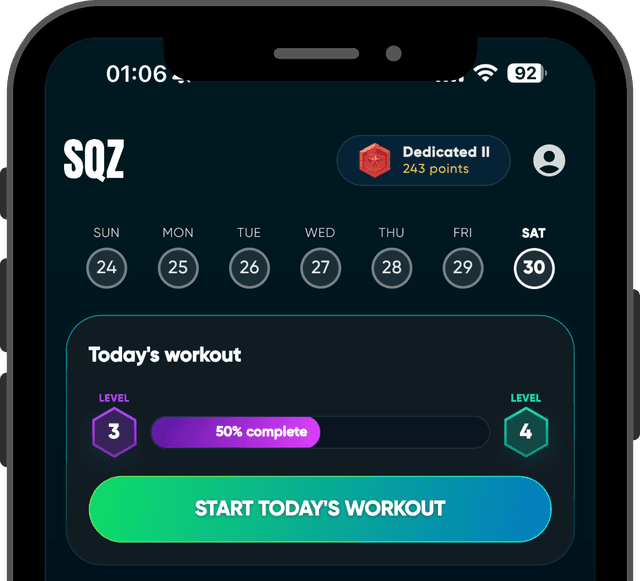
The routine above works on its own, but many men lose momentum without structure. An app like SQZ can guide timed squeeze-and-release sessions, track your streaks and remind you to train morning, afternoon and night so you hit all three daily sets without guessing.
Whether you train solo or with guided sessions, the goal is the same: find the right muscles, practice with control and build the habit.
Quick Reference
- Find muscles: stop urine or gas lift (reference only)
- Hold: 3-5 seconds, work up to 10 seconds
- Rest: match your hold time
- Reps: 10 per set
- Sets: 3 per day
- Avoid: training on the toilet, overtraining, wrong muscles
Conclusion
Kegel exercises are one of the most accessible tools for pelvic health. They are discreet, free and backed by decades of clinical use for incontinence, prolapse support and sexual function.
Start with the muscle-finding cues, follow the 3-set daily routine and progress your hold time only when reps feel clean and easy. Consistency over weeks matters more than intensity in a single session.
Want structured Kegel training that fits your day?
Take a quick quiz to get a personalized Kegel plan in seconds.